
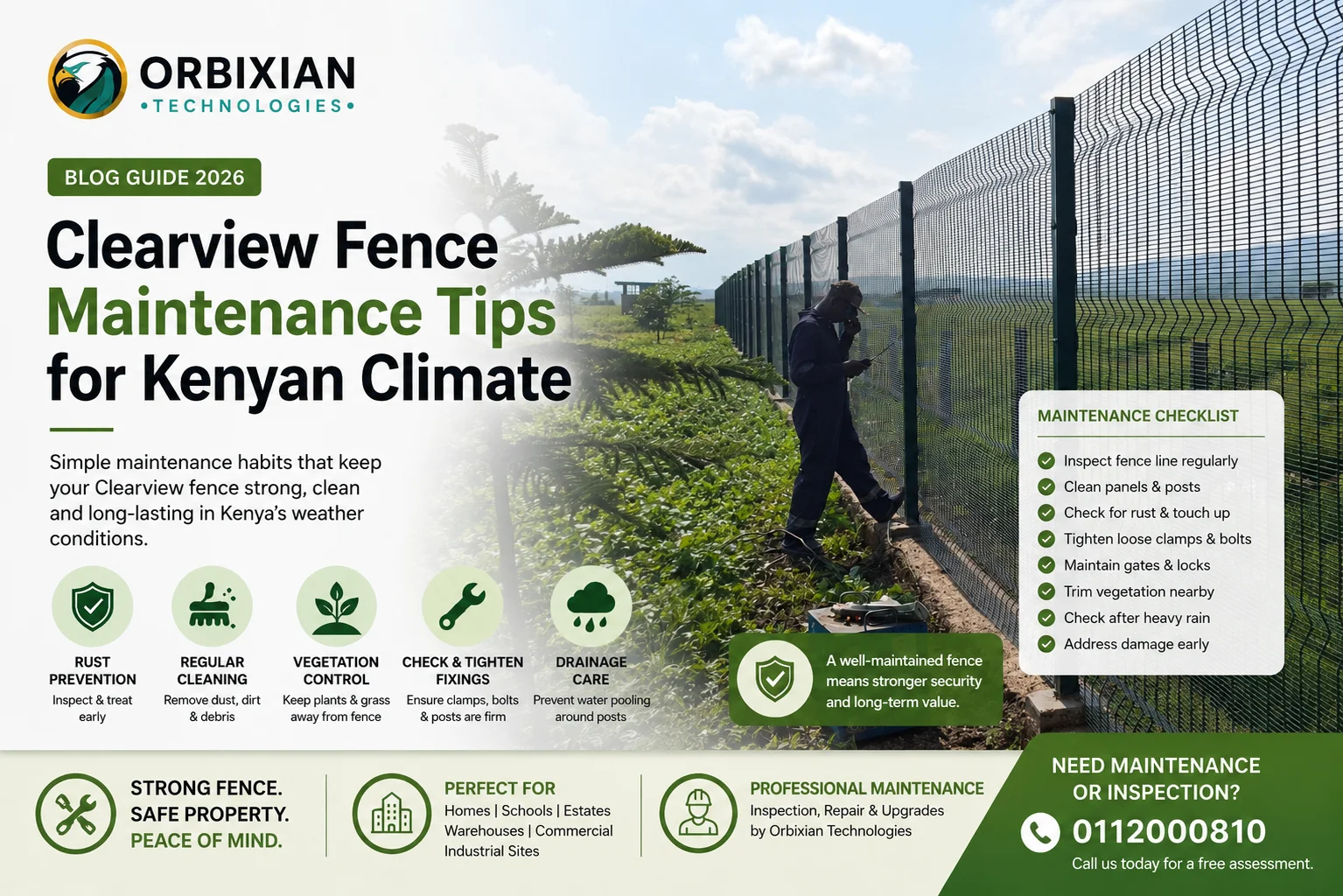
Clearview Fence Maintenance Tips for Kenyan Climate
Clearview fence maintenance tips for Kenyan climate are important for homeowners, schools, commercial properties, factories, warehouses, farms and gated communities that want long-lasting perimeter security. Clearview fencing is strong, modern and durable, but like any outdoor security system, it needs proper care to remain clean, firm and reliable over time.
In Kenya, fences are exposed to different climate conditions depending on the location. Nairobi and Kiambu can experience dust, rain, mud and changing temperatures. Coastal areas such as Mombasa, Kilifi and Diani face humidity and salt air. Dry regions such as Kajiado, Machakos and parts of Naivasha may expose fences to dust, heat and strong sunlight. High rainfall areas can create moisture around posts and foundations.
Because of these conditions, proper Clearview fence maintenance helps prevent rust, loose fittings, damaged posts, blocked drainage, vegetation overgrowth and early wear. A well-maintained Clearview fence keeps your property secure, improves appearance and reduces future repair costs.
Why Clearview Fence Maintenance Matters
Clearview fencing, also known as anti-climb fencing, is designed to provide strong perimeter protection while maintaining visibility. It is commonly used for residential estates, schools, warehouses, factories, commercial properties, institutions and high-security compounds.
The fence works best when the panels, posts, clamps, bolts and foundation remain in good condition. If one part becomes weak, the entire security line can be affected. A loose post, missing clamp or rusted fixing can create a weak point that intruders may target.
Regular maintenance keeps the fence:
- Strong and stable
- Clean and professional
- Rust-resistant
- Properly aligned
- Safe around gates and corners
- Ready for long-term security use
For property owners in Kenya, maintenance is not just about appearance. It is part of protecting the value and safety of the property.
1. Inspect Your Clearview Fence Regularly
The first maintenance step is regular inspection. Walk along the fence line and check the full perimeter. Look at the panels, posts, clamps, bolts, gates, corners and ground around the fence.
Check for:
- Loose bolts or clamps
- Rust spots
- Bent panels
- Leaning posts
- Damaged gate hinges
- Vegetation pushing against the fence
- Soil erosion around posts
- Cracks around concrete bases
- Missing accessories
For residential properties, a monthly inspection is enough. For schools, warehouses, factories and commercial properties, inspection should be done more often because the perimeter may experience more movement, pressure or attempted tampering.
2. Clean Dust and Dirt from the Fence
Dust is common in many parts of Kenya, especially during dry seasons. Over time, dust settles on the fence panels and posts, making the fence look dull and reducing the clean finish.
Use clean water, a soft brush or cloth to wash the fence occasionally. Avoid harsh chemicals that may damage the powder coating. For light dirt, water and mild soap are enough.
Cleaning is especially important for properties near roads, construction sites, farms and dusty open areas. A clean fence looks more professional and allows you to notice rust, scratches or damage early.
3. Prevent Rust Before It Spreads
Rust prevention is one of the most important Clearview fence maintenance tips for Kenyan climate conditions. Even galvanized and powder-coated fences can develop rust if the coating is scratched, damaged or exposed for a long period.
Inspect areas around:
- Welded joints
- Bolts and clamps
- Gate hinges
- Base plates
- Scratched posts
- Cut edges
- Corners and connection points
If you see a small rust spot, clean it early and apply suitable anti-rust treatment or touch-up paint. Do not wait until rust spreads across the panel or post.
For coastal areas such as Mombasa and Kilifi, maintenance should be more frequent because salty air can speed up corrosion. Coastal properties should use high-quality galvanized and powder-coated materials and inspect the fence regularly.
4. Keep Vegetation Away from the Fence
Vegetation can damage a Clearview fence if it is allowed to grow through or press against the panels. Trees, hedges, vines and tall grass can trap moisture against the fence and increase the risk of rust.
Overgrown vegetation can also reduce visibility, which weakens one of the main advantages of Clearview fencing. The fence is designed to allow guards, CCTV and property owners to see through the perimeter clearly.
Trim bushes, grass and branches along the fence line. Keep climbing plants away from the mesh. Remove roots or shrubs that push against posts and foundations.
This is especially important for estates, farms, schools and properties with landscaped boundaries.
5. Check Posts and Foundations After Heavy Rain
In rainy seasons, soil can soften around posts and foundations. Water runoff can also erode soil near the fence line. If the foundation becomes weak, the fence may start leaning or moving.
After heavy rain, inspect:
- Post bases
- Concrete foundations
- Drainage channels
- Soil erosion points
- Corners and gate posts
- Low areas where water collects
If water is pooling around the posts, improve drainage. Standing water can weaken concrete and increase corrosion risk on metal components.
For sloped sites, drainage planning is important. Water should flow away from the fence foundation, not collect around it.
6. Maintain Gates and Moving Parts
Gates are one of the most used parts of any fence system. Even if the Clearview panels are strong, a weak or poorly maintained gate can create a security problem.
Check gate hinges, locks, wheels, tracks, latches and frames. Make sure the gate opens and closes smoothly. Tighten loose bolts and lubricate moving parts where needed.
For sliding gates, remove stones, soil and debris from the track. For swing gates, check that the hinges are firm and the gate does not drag on the ground.
A secure fence must have secure gates. This is especially important for commercial properties, schools, warehouses and estates with daily access.
7. Repair Bent or Damaged Panels Early
Clearview panels are strong, but damage can happen from vehicles, falling branches, forced pressure or poor handling. A bent panel should not be ignored because it may weaken the fence line and affect the appearance of the property.
If a panel is bent, inspect whether the posts, clamps and fixings are also affected. Sometimes the panel may need straightening, reinforcement or replacement.
For high-security properties, damaged panels should be repaired immediately. Leaving damage visible can encourage further tampering.
8. Protect the Fence from Soil and Debris Build-Up
In some Kenyan sites, red soil, mud, leaves and construction debris can collect near the bottom of the fence. When debris touches the lower part of the panels for long periods, it can trap moisture and encourage rust.
Keep the base of the fence clear. Remove soil, leaves and rubbish from the lower mesh area. This also improves visibility and keeps the fence looking neat.
For commercial and institutional properties, assign routine perimeter cleaning as part of compound maintenance.
9. Repaint or Touch Up When Necessary
Powder-coated Clearview fencing usually maintains a clean finish for a long time. However, scratches, impact marks or exposed steel should be repaired early.
Use matching paint or recommended coating products for touch-ups. This helps protect the exposed section and keeps the fence appearance consistent.
If the fence is old or heavily exposed, repainting may be necessary as part of long-term maintenance. Repainting improves appearance and adds another protective layer.
10. Add Security Upgrades Where Needed
Maintenance is also a good time to review your security level. If the area has increased security risks, you can upgrade the existing Clearview fence with additional protection.
Common upgrades include:
- Razor wire topping
- Electric fence integration
- Security spikes
- CCTV cameras
- Floodlights
- Alarm systems
- Stronger gate locks
- Access control systems
Clearview fencing works well with these upgrades because it provides visibility and a strong base structure.
Recommended Maintenance Schedule
For most Kenyan properties, this simple schedule works well:
Monthly:
- Walk around the fence
- Check visible damage
- Remove vegetation
- Inspect gates and locks
Every 3 months:
- Clean dust and dirt
- Tighten loose bolts
- Check rust spots
- Clear drainage areas
Every 6 months:
- Inspect posts and foundations
- Touch up scratched areas
- Check gate alignment
- Review security upgrades
After heavy rain or storms:
- Check erosion
- Inspect leaning posts
- Remove fallen branches
- Clear water pooling areas
This schedule helps extend the lifespan of your Clearview fence and keeps your property protected.
Professional Clearview Fence Maintenance in Kenya
Some maintenance can be done by the property owner or caretaker, but professional inspection is important when there is rust, leaning posts, damaged panels, gate problems or security upgrades needed.
Orbixian Technologies provides Clearview fence supply, installation, repair and maintenance services across Kenya. We help property owners inspect existing fence systems, repair weak points, replace damaged panels, reinforce gates and improve perimeter security.
Our team works with residential estates, schools, factories, warehouses, commercial properties, institutions and industrial facilities that need strong and reliable fencing solutions.
Keep Your Clearview Fence Strong for Years
Clearview fencing is one of the best perimeter security options for Kenyan properties, but proper maintenance keeps it performing at its best. Regular inspection, cleaning, rust prevention, vegetation control, drainage care and gate maintenance can extend the life of the fence and protect your investment.
If your Clearview fence has loose posts, rust spots, damaged panels, weak gates or overgrown vegetation, it is better to fix the issue early before it becomes expensive.
For professional Clearview fence maintenance in Kenya, send your location, fence photos or perimeter details to Orbixian Technologies and request a maintenance assessment.